
8 products
How a Hologram Projector Actually Works
Most people picture a lens throwing light onto a wall or a screen. That's not what these are, and the difference matters when you're deciding where to install one.
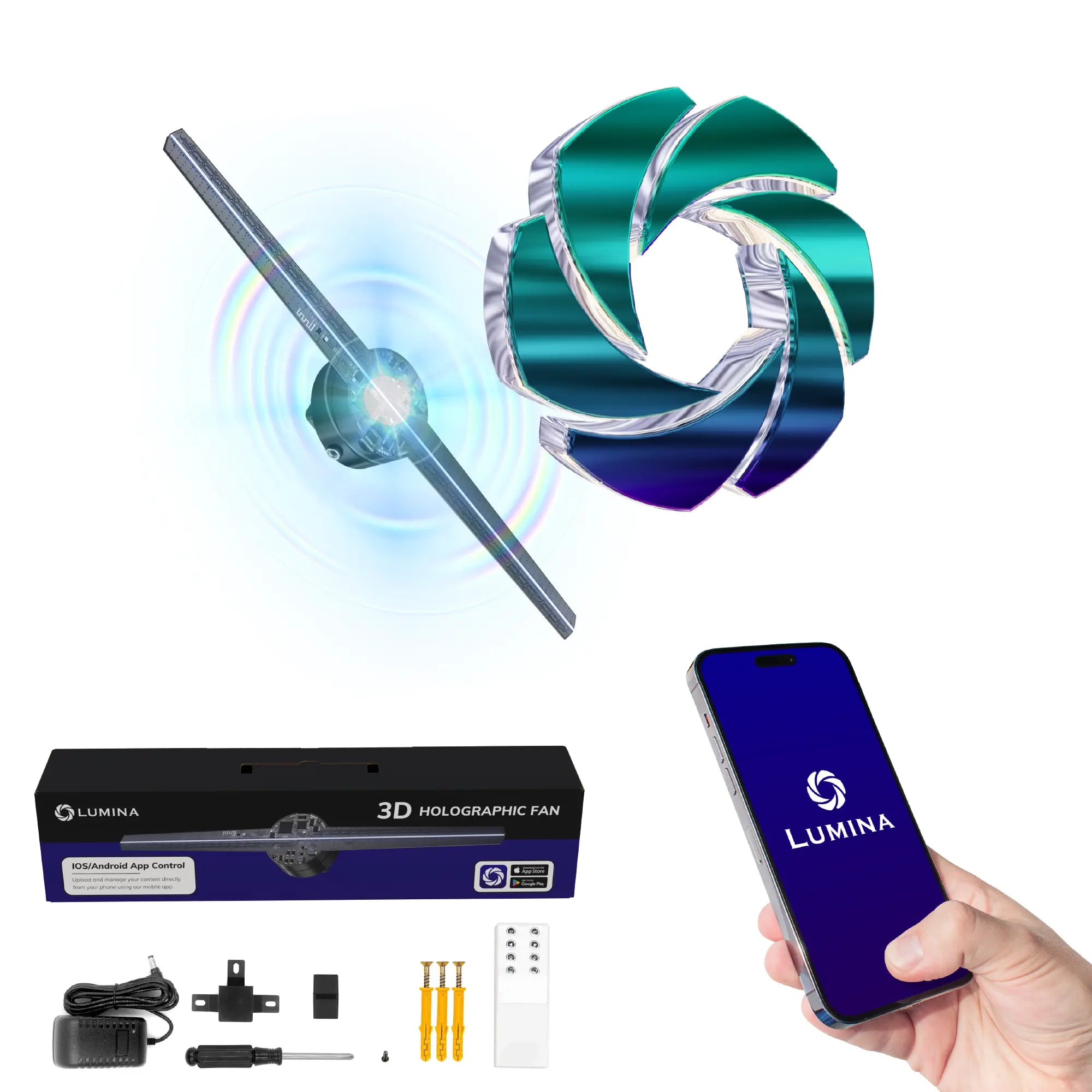
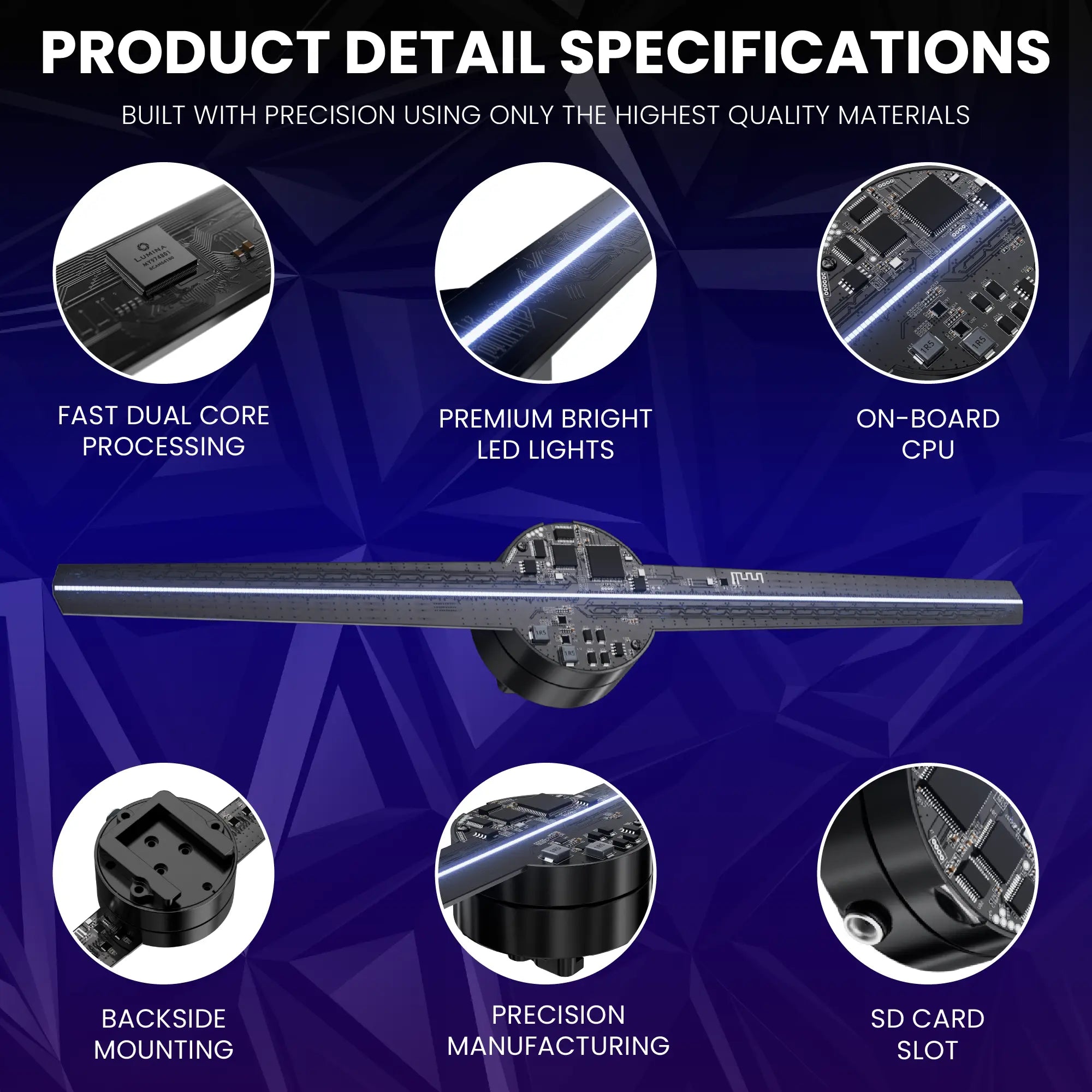
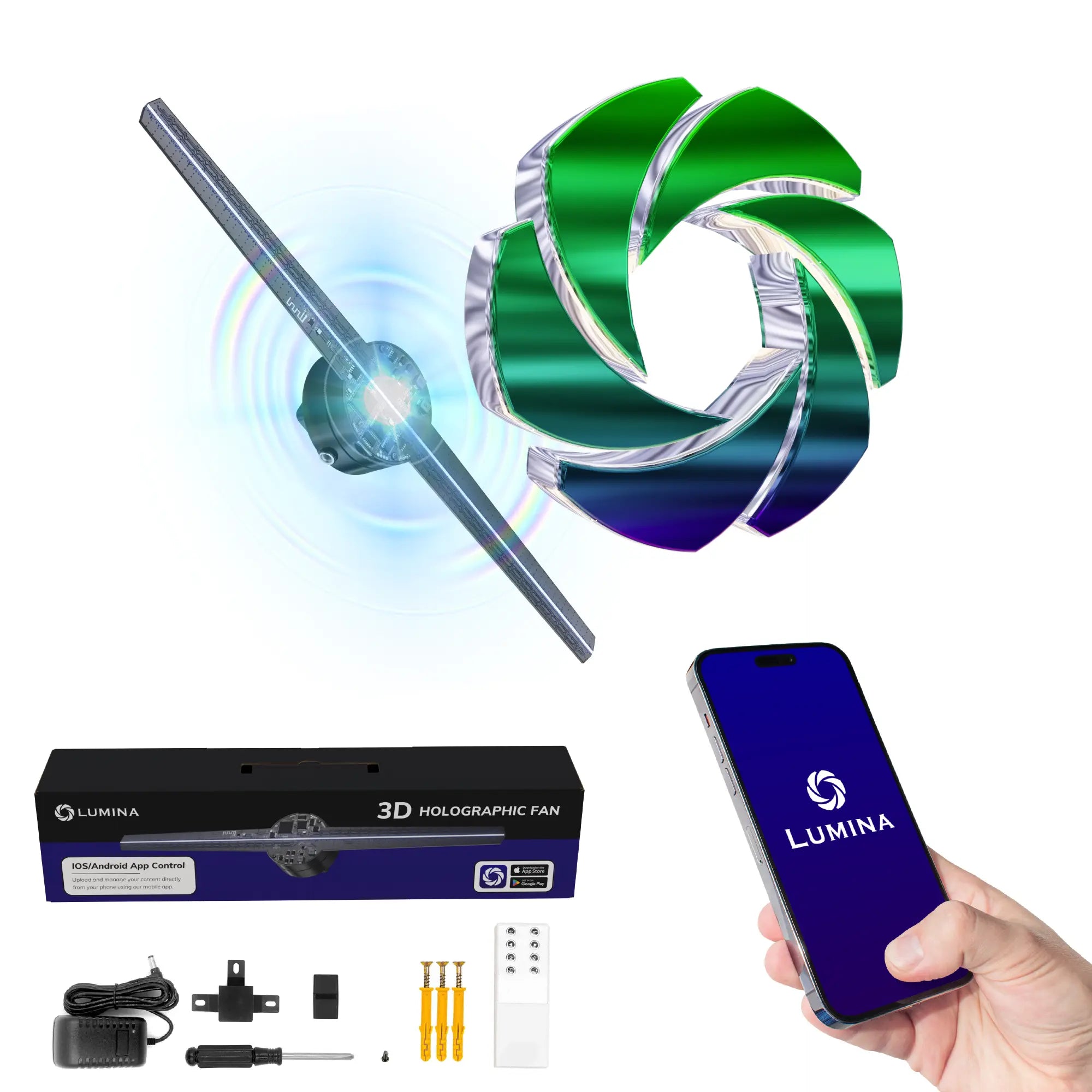
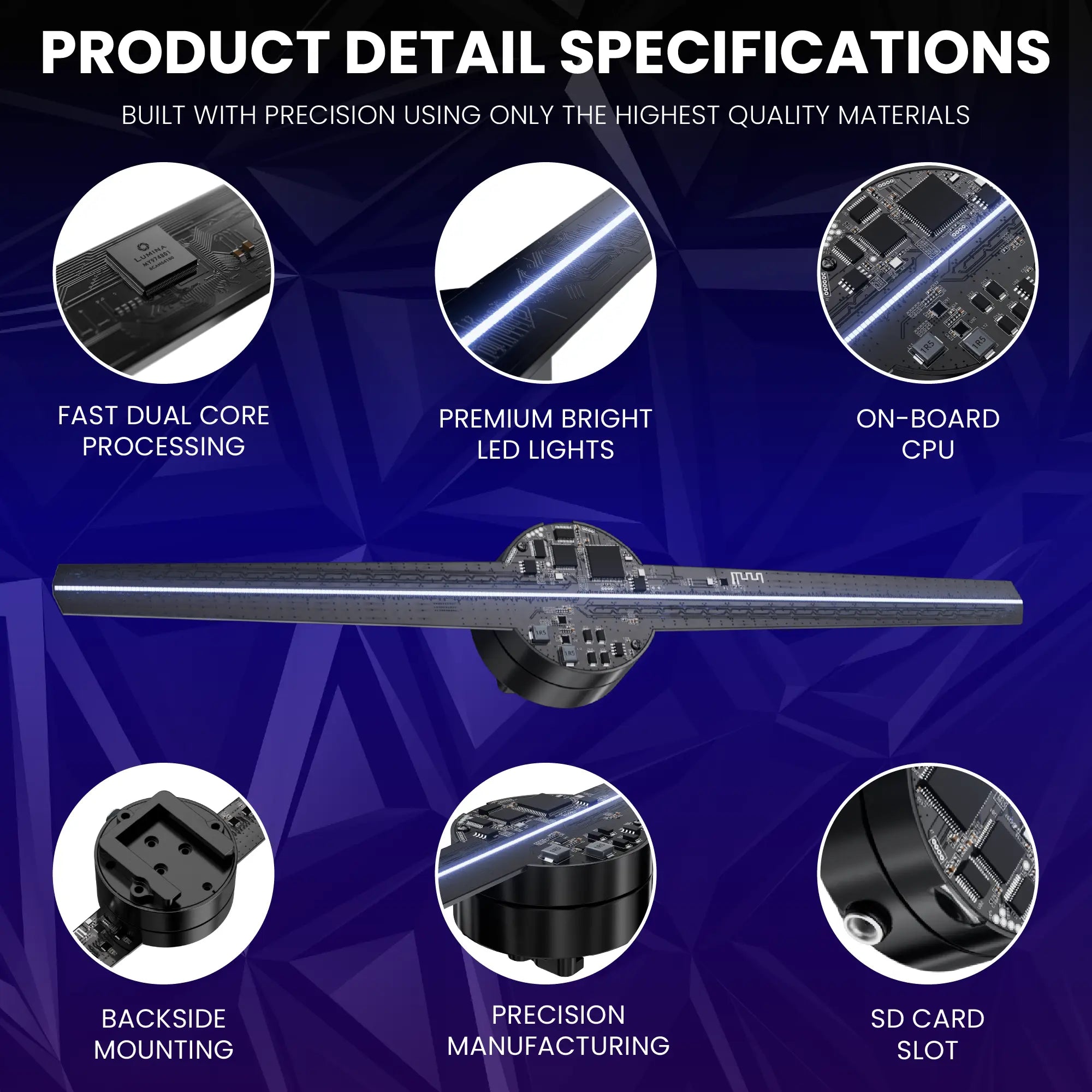
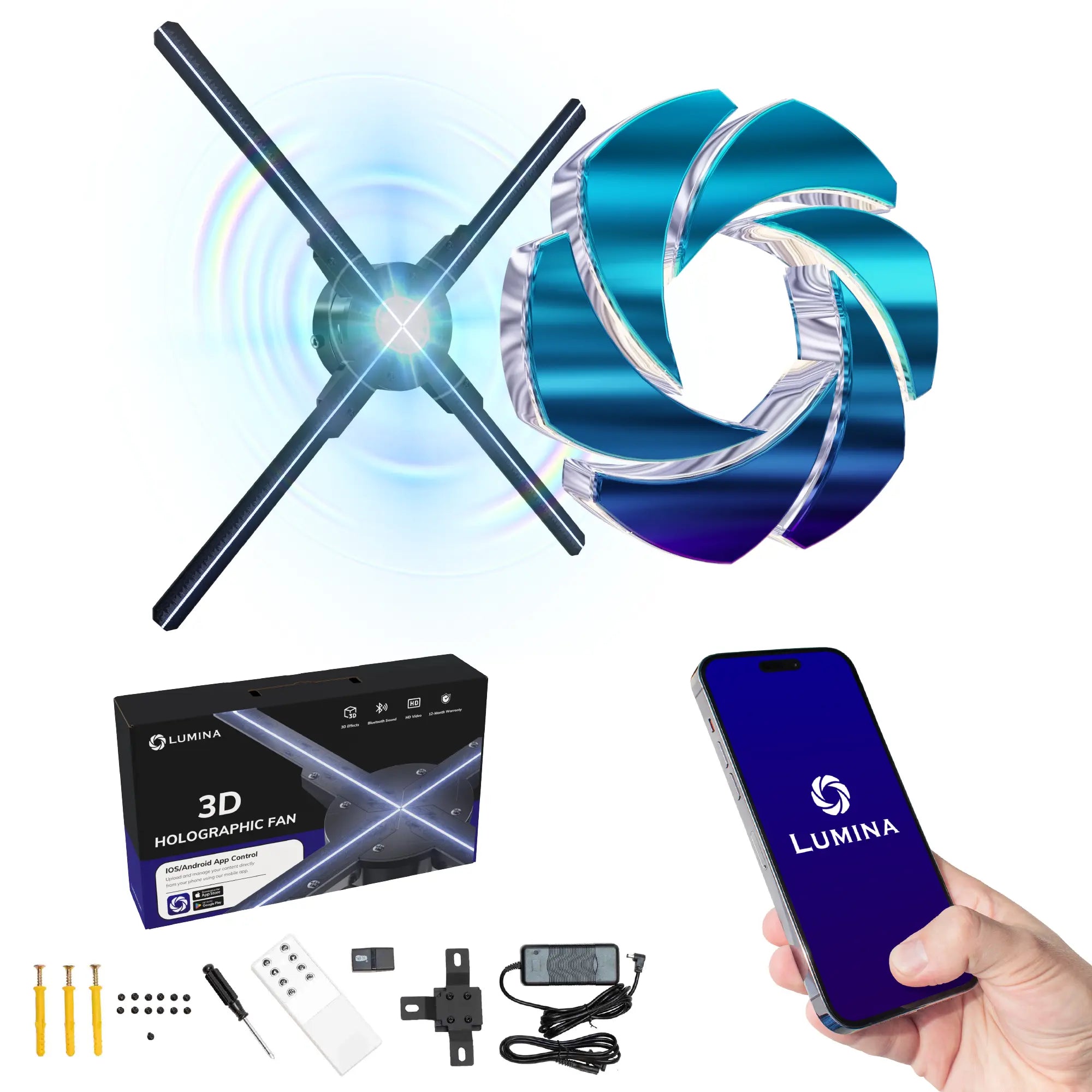
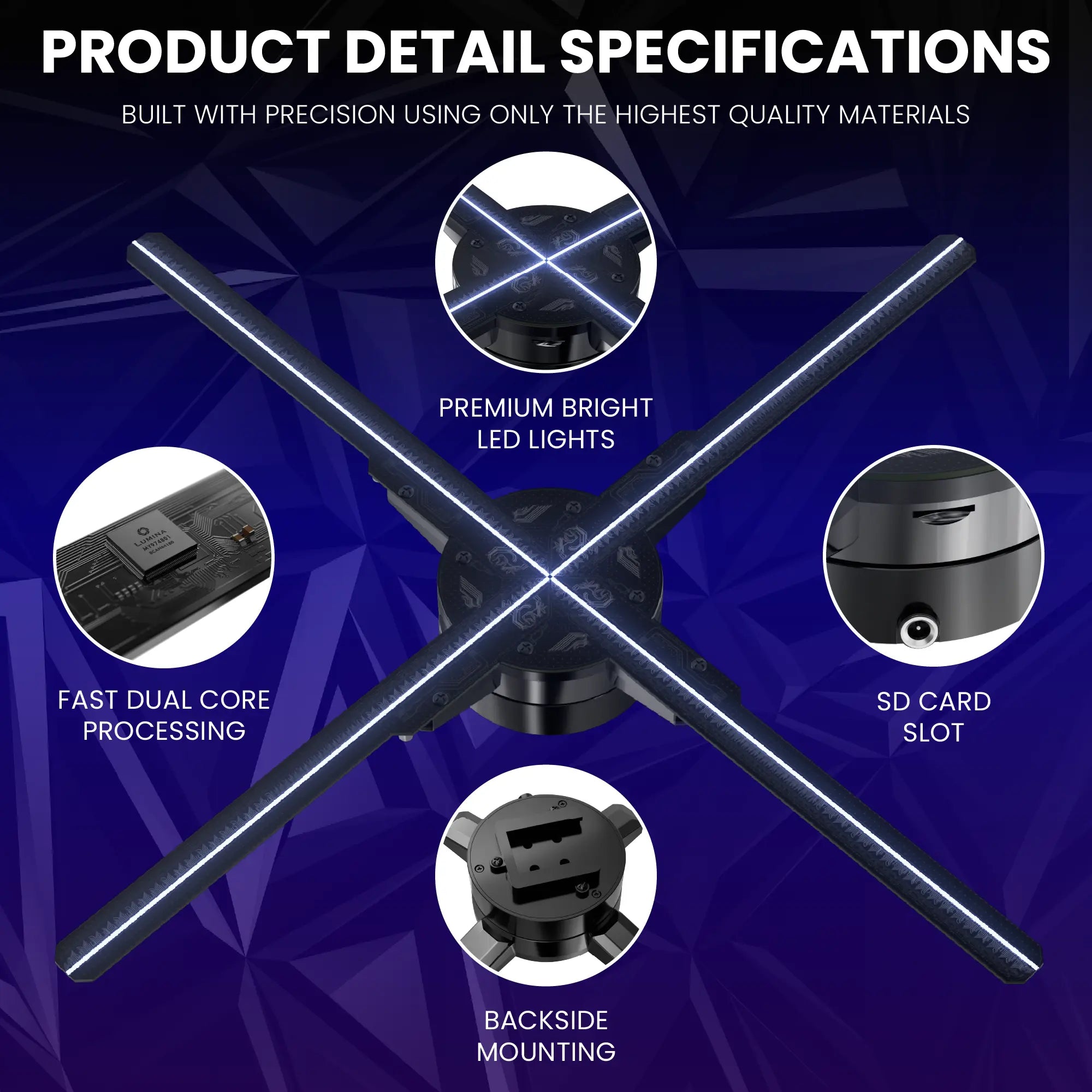
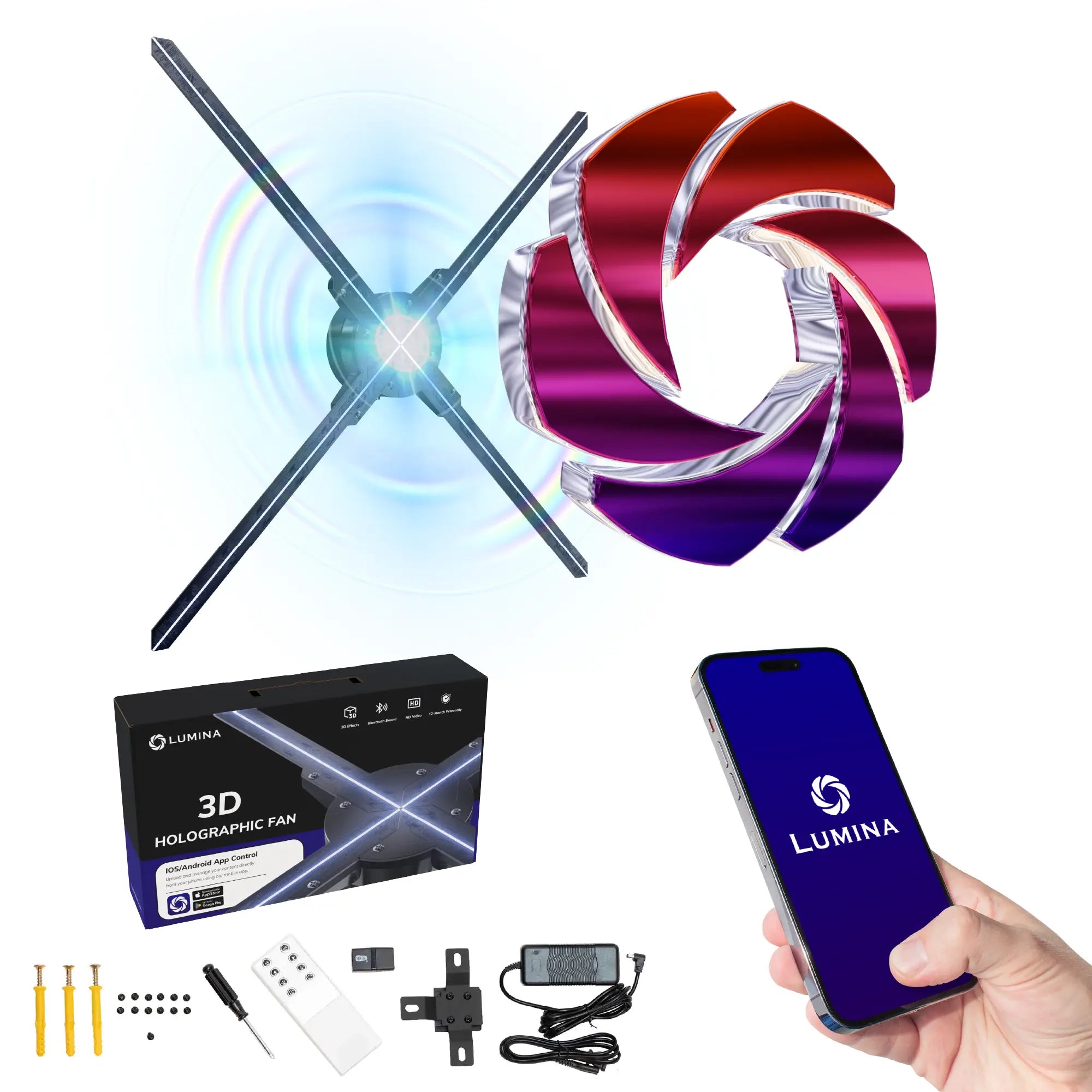
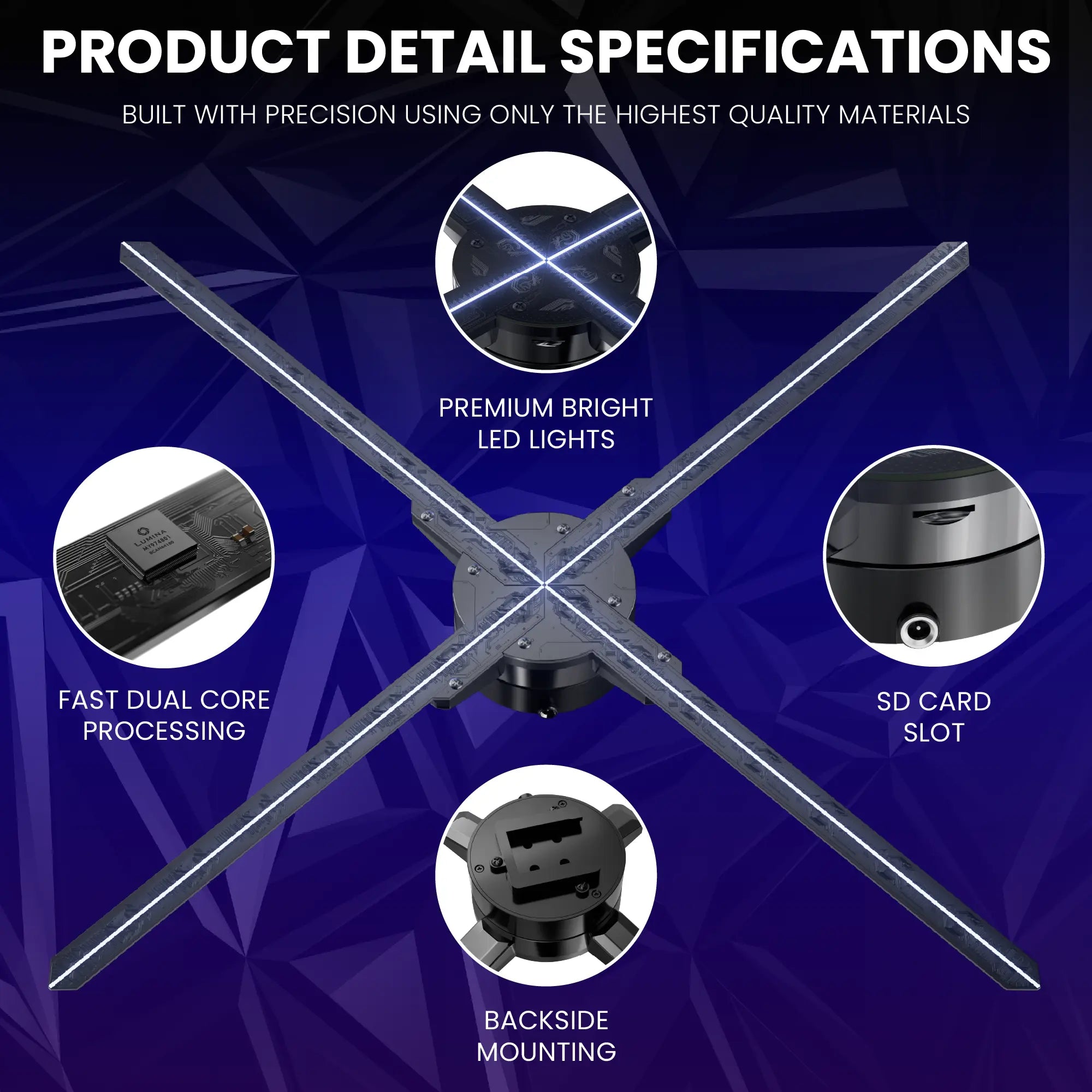
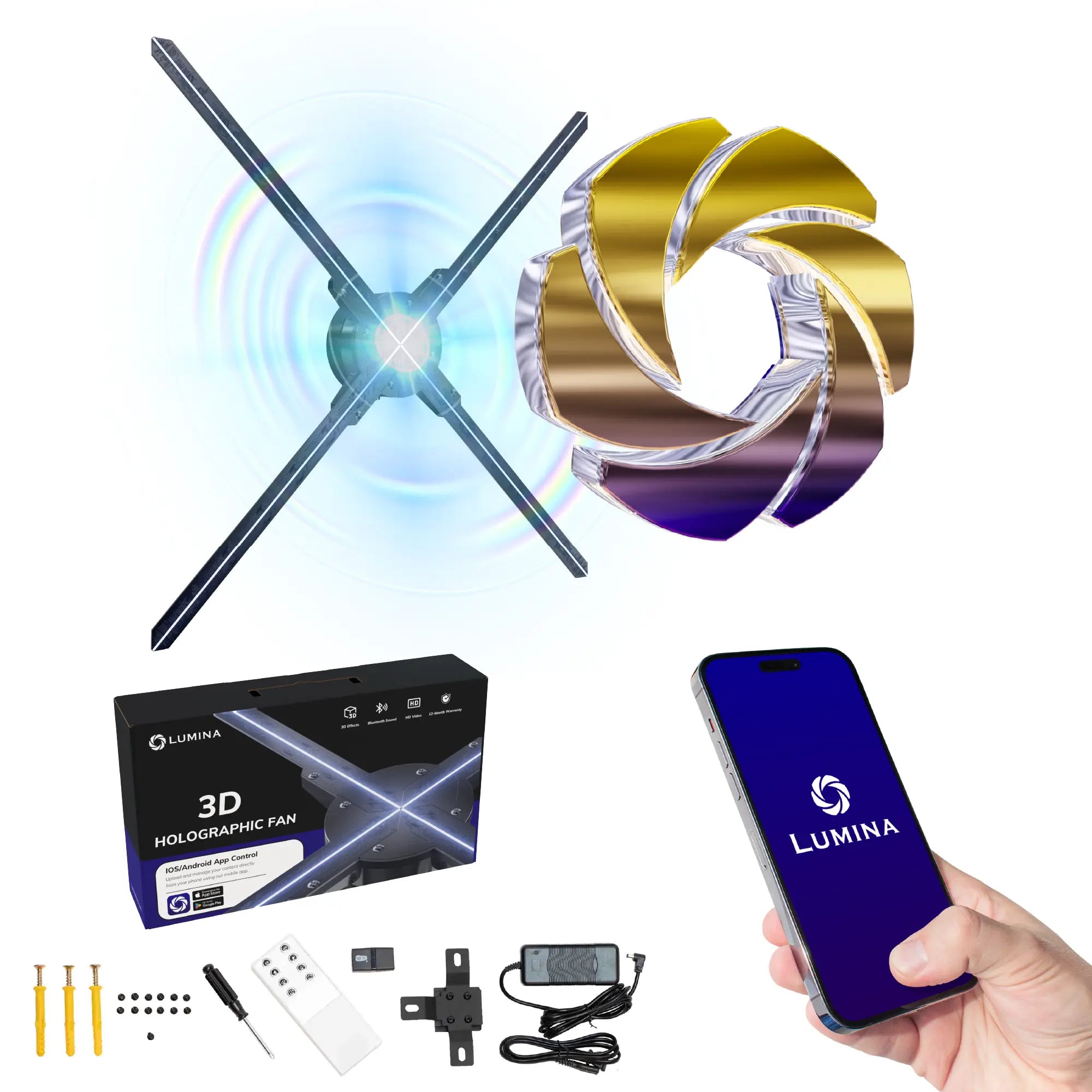
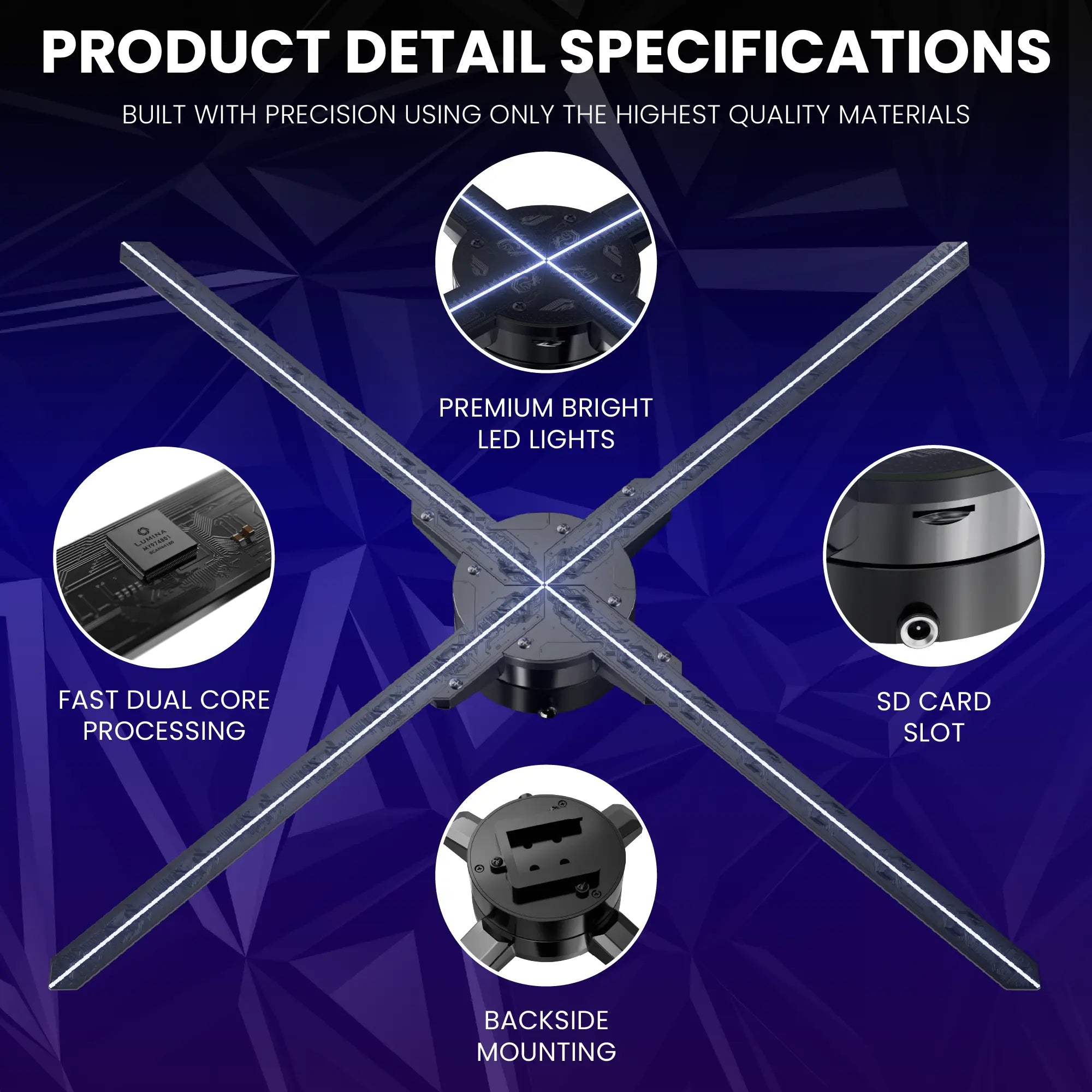
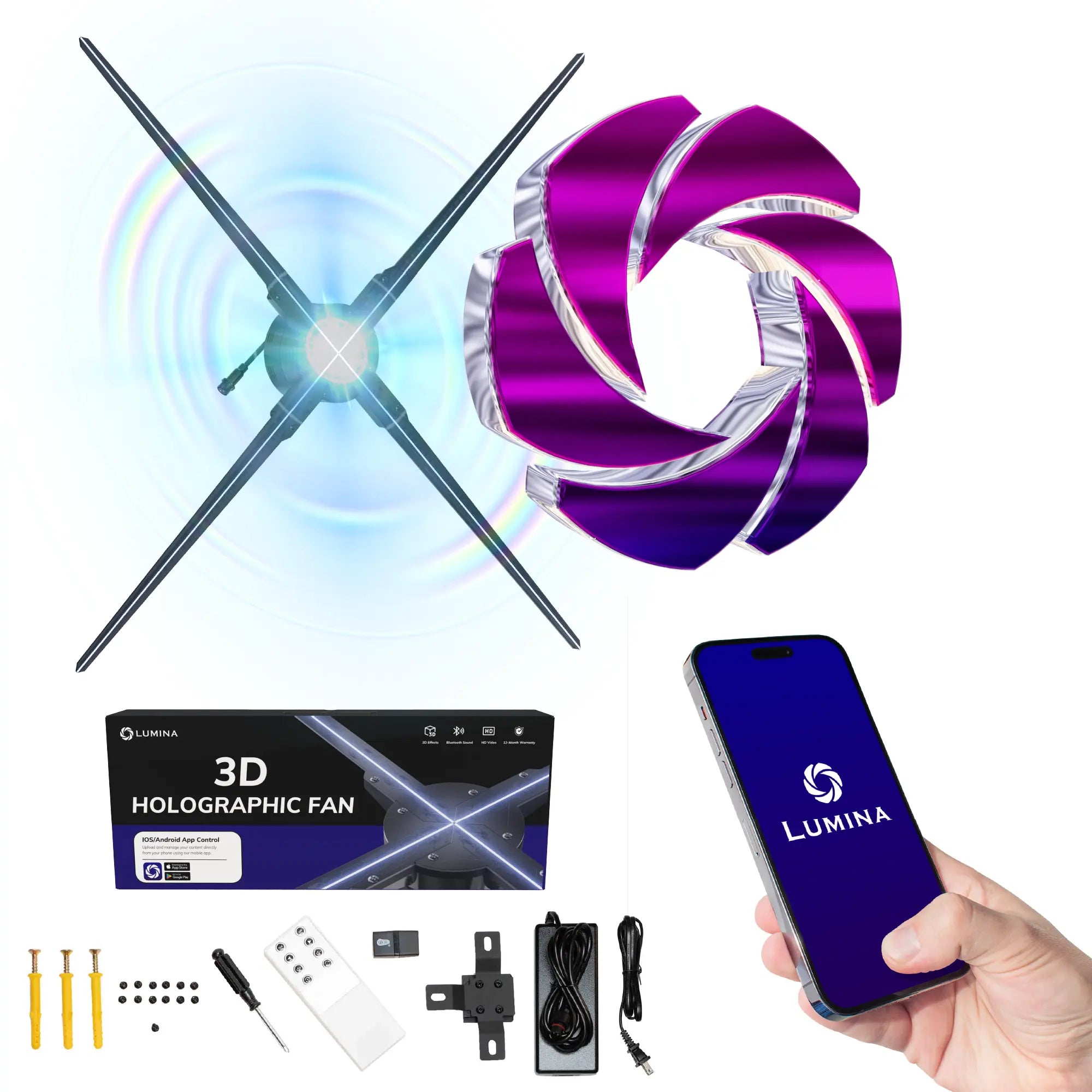
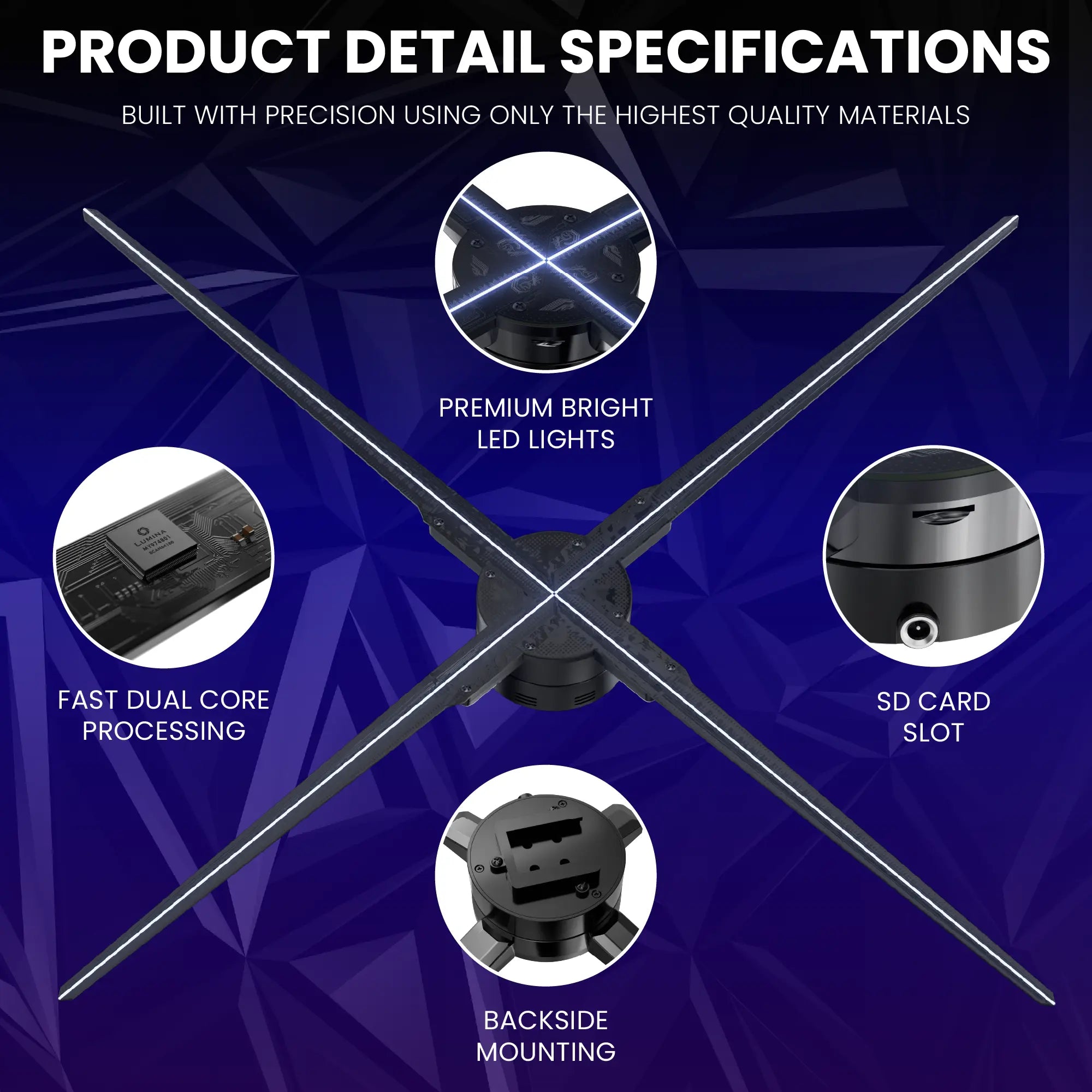
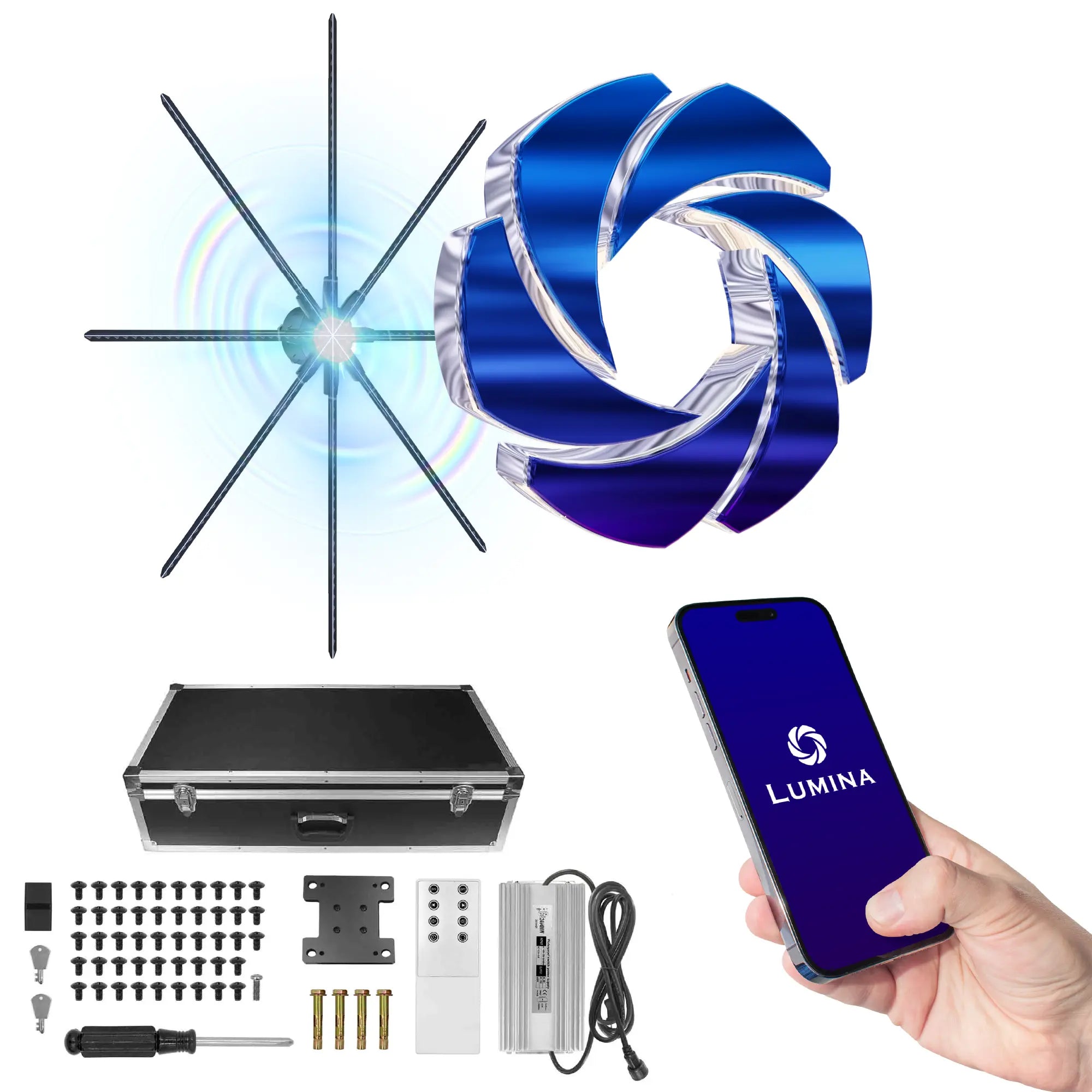
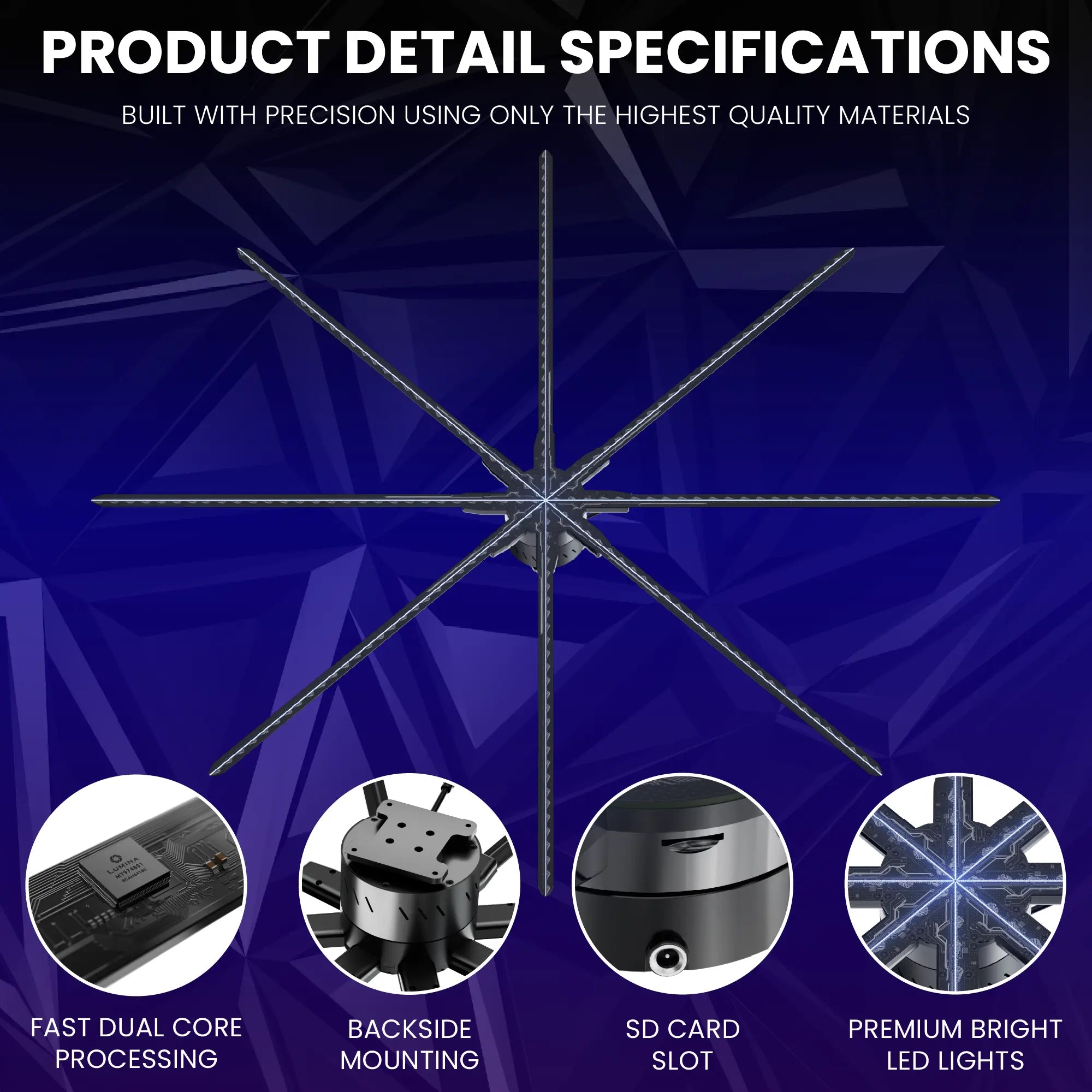
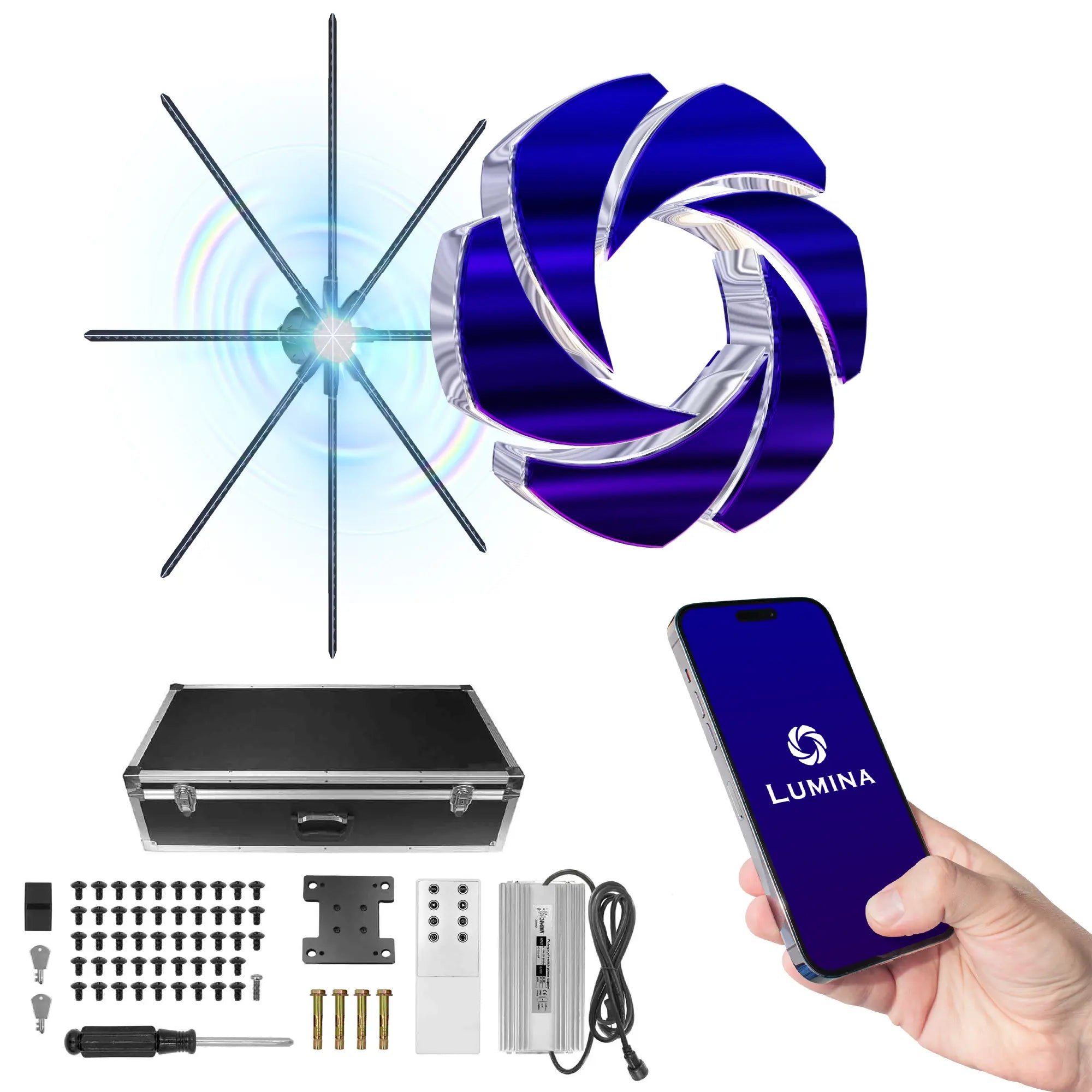
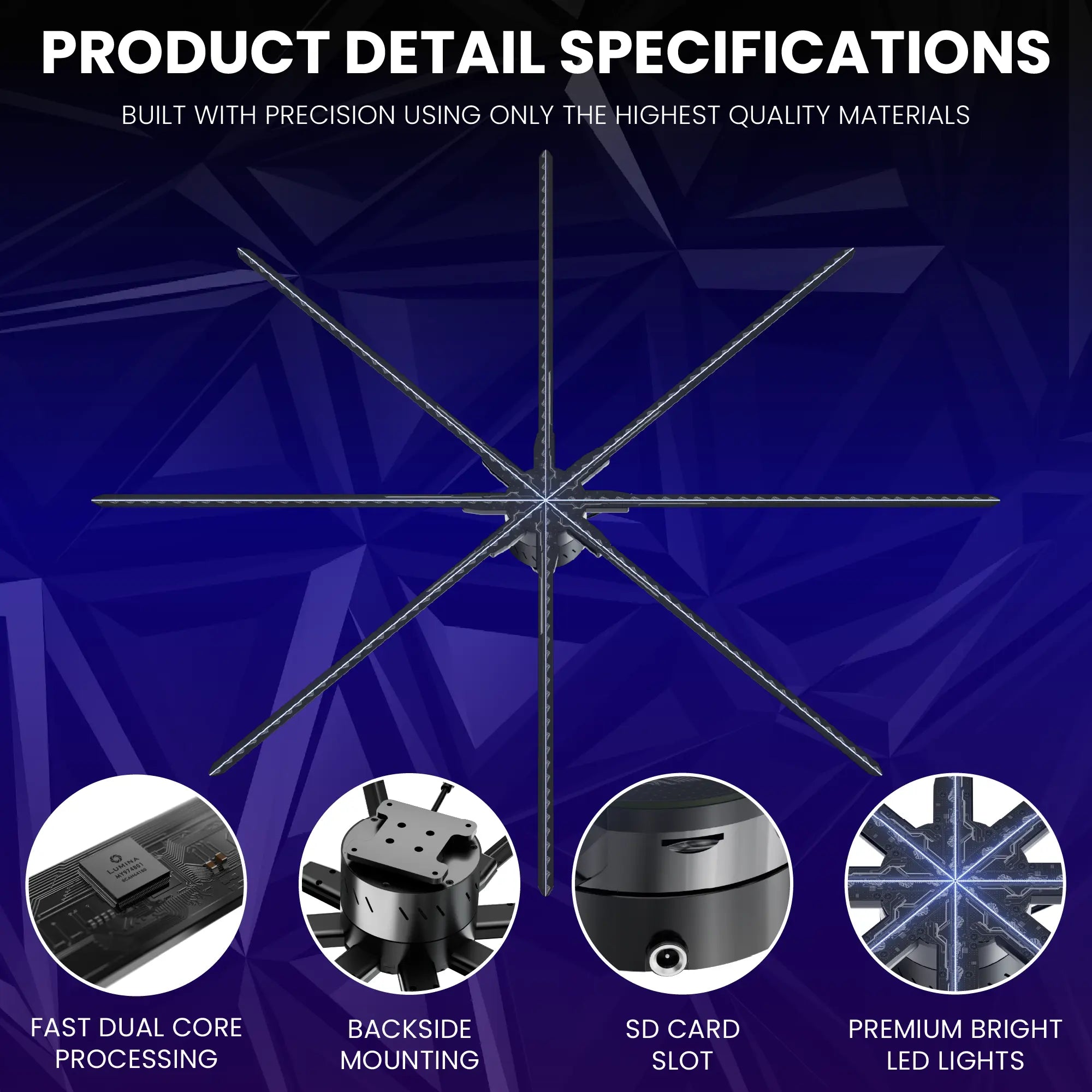
A hologram projector of this type is a high-speed LED display. Hundreds of individually addressable RGB LEDs are mounted along rotating blades, firing in precise sequence as the blades spin. Your eye can't track anything moving that fast, so persistence of vision fuses the points of light into a single continuous image that appears to hang in open air. There's no projection surface, no throw distance to calculate, and no glasses.
That's also why it works in a storefront window or an open lobby where a conventional projector would fail completely. Nothing needs to be behind the image. The blades themselves disappear at operating speed, so all a viewer sees is the content, floating.
Is It a Real Hologram?
Not in the strict scientific sense — a true hologram uses laser interference patterns to reconstruct a light field, and that technology isn't commercially practical at this scale or price. What a hologram projector produces is a free-floating volumetric image with no visible screen or frame.
We'd rather be straight with you about that than oversell it. In practice, the effect is what people mean when they ask for a hologram: a full-color 3D image apparently suspended in mid-air that makes people stop walking and pull out their phones. Every hologram machine you've seen at a trade show, retail window, or product launch in the last few years is almost certainly this technology or a Pepper's-ghost reflection rig.
Choosing a Hologram Projector for Your Space
Screen size is the whole decision. Larger units produce a bigger, brighter image that holds up at distance and in ambient light.
- Compact units (12.5"–20.5") suit counters, reception desks, and shelf displays where viewers are within a few feet.
- Mid-size units (25.5"–39.5") are the most common commercial choice — retail windows, trade show booths, restaurant entries, showrooms.
- Large-format units (59"–71") handle lobbies, stages, conferences, and any installation where the image needs to read from across a room.
- Multi-unit configurations synchronize several projectors into one continuous image for video-wall-scale installations.
If you're unsure, viewing distance is the test: the further your audience stands, the larger the unit needs to be. Our team will spec it with you if you send photos of the space.
Content and Control
Every LUMINA hologram device runs from our free iOS and Android app — no subscription and no dedicated computer. Upload MP4, GIF, and image files over Wi-Fi, build playlists, and adjust brightness and rotation speed from your phone. Our HDMI models accept a live video feed for real-time or interactive content.
If you don't already have 3D content, our 3D Animation Lab lets you produce custom animations, and every purchase includes free credits.
Common Questions
How much does a hologram projector cost?
Our units start at $138.99 for the 12.5" model and run to $4,188.99 for the 71". Most commercial buyers land in the $588–$1,188 range, which covers the 25.5" and 39.5" sizes suited to retail and trade show use.
Can I use one outdoors?
These are indoor devices. The most effective outdoor-facing setup is mounting inside a storefront window facing out — you get street visibility with the unit protected from weather.
Do I need special content?
No. Standard video and image files work. Content with a black background reads best, since black pixels simply stay unlit and the image appears to float free.
Is it safe with people nearby?
The blades are thin and effectively invisible at speed, but for any location where people pass within arm's reach we recommend an acrylic enclosure or overhead mounting. We carry both.
What support comes with it?
A 12-month warranty, 30-day money-back returns, free same-day shipping, and ongoing technical support from our team in Columbia, Missouri.
Looking for the full range of sizes and configurations? Browse all holographic fans, or see our human-sized hologram fans for the largest displays we build.